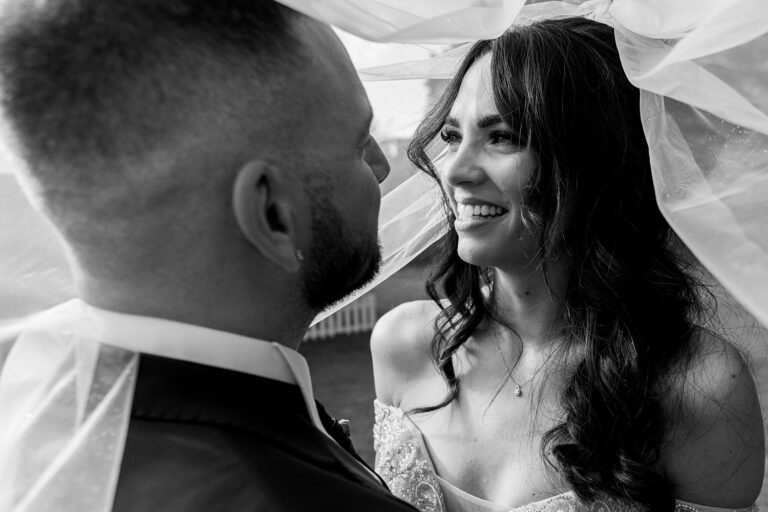

Golden Hour and Sunset Wedding Photos for Breathtaking Wedding Day Images

Golden hour wedding photos are portraits taken when the daylight is low and changing near the end of the day. They can be a lovely reason to step out together for a few minutes, but they should work around your wedding rather than pull you away from it. The best plan is a flexible one that respects the venue, weather and flow of the day.
Why do couples make time for golden hour photos?
A wedding day moves quickly. By the time the meal, speeches and hugs have happened, a short walk together can be a welcome breather. It isn’t about disappearing for a huge part of the reception. It’s about a few quiet minutes and photographs that feel like you.
- Golden hour gives soft, warm light that’s kind to everyone.
- A few minutes outside at the right time can give you some of your favourite portraits.
- Low sun means fewer harsh shadows and nobody squinting.
- It only lasts a short while, so it helps to have a rough plan.
- It’s also a nice excuse for a breather together in the middle of the party.
- I keep an eye on the light through the day, so you don’t have to.
I keep portraits relaxed and purposeful. Around 15 minutes is normally enough when the setting and timing are right. You get a moment together, I can give you a little direction, and you can get back to your guests before anyone starts wondering whether you have escaped through a side gate.
How should golden hour shape your wedding timeline?
Don’t choose a ceremony time just to chase a particular photograph. Instead, tell me early that evening portraits matter to you, then leave some breathing room in the later part of the day. I can work with the timeline you have built and keep an eye on the light as it changes.
There are fixed points on every wedding day. The ceremony, meal and speeches all need to happen. The portrait window should fit among them rather than cause stress around them. A small amount of flexibility is far more useful than a minute by minute plan that only works in perfect conditions.


What happens if the light isn’t what you hoped for?
We make the most of the day that’s actually in front of us. A cloudy evening, rain or a venue with limited outdoor access may change the plan. That isn’t a failure. Your wedding is still full of people you love, proper reactions and moments worth photographing.
My approach is documentary led, with 95% real moments, 5% relaxed portraits. Those real moments aren’t on hold while we wait for a sunset. I photograph the atmosphere as it unfolds, then use a short portrait window when it’s sensible to do so.


How can you prepare without overplanning?
Talk to me and your venue about the spaces available later in the day. Consider whether you’ll be happy stepping away briefly from the reception. Let the people running the schedule know it might happen. Then leave room to adapt.
There’s no need to practise poses or build a long list of shots. The most useful thing you can do is trust that you don’t have to know what to do. I’ll guide the practical part, keep it moving and make sure it doesn’t become an awkward interruption.
- Light from behind can give lovely glowing edges and silhouettes, light from the front gives warm, clear faces. I’ll use whichever suits the moment.
- Once the sun drops, the light turns cooler and bluer, which gives a completely different feel for a few extra minutes.
- You won’t be holding stiff poses. A walk, a chat and a bit of direction is plenty.
What should you ask your venue about evening portraits?
Ask which outdoor areas can be used later in the day, whether there are access restrictions and what the weather fallback looks like. Those answers are specific to the venue. They are more useful than any generic promise about what golden hour will look like.


Every venue and every day is different, so I’ll plan the timing with you once I know your venue and your timeline. For now, the simple answer is to leave space for a short, flexible portrait break and let your wedding day lead the way.
- If evening portraits matter to you, tell me early, so I can plan a window around your meal and speeches.
- The light won’t wait, so when I give you a nod, it’s worth heading out then rather than after one more drink.
- A quick freshen up beforehand never hurts, but nobody’s expecting perfection by 8pm.
- Keep anything you want in the photos, like the bouquet, somewhere handy.
- Long shadows give the photos depth.
- Warm light suits the end of a long, happy day.
- A few quiet minutes together usually shows in the portraits.
- Just after sunset, the softer blue light can be lovely too.


FAQ
What is the golden hour in wedding photography?
It’s the short spell just after sunrise or before sunset, when the sun’s low and the light is soft and warm. It’s flattering, gives long gentle shadows, and makes for lovely relaxed portraits.
Why is golden hour good for wedding photos?
The light is soft, warm and low, so there are fewer harsh shadows and nobody’s squinting into the sun. It flatters everyone and gives the photos a warm, relaxed feel.
How can we plan our wedding timeline to include the golden hour?
Ask your photographer to check the sunset time for your date, then leave a little space in the evening, roughly an hour before sunset, for a short portrait break. Keep it flexible, as the weather and your venue will have a say.
What are the challenges of coordinating golden hour photography sessions?
The window is short and often lands during the meal, speeches or the start of the party, and the weather may not play along. A bit of planning with your photographer, and being happy to step away for a few minutes, sorts most of it.
How can understanding the interplay of light and shadow improve golden hour wedding photos?
Knowing where the light’s coming from lets me decide whether to put the sun behind you for a glow, or in front for warm, clear faces. It’s my job to think about that, not yours.
Can an engagement session help with golden hour wedding photos?
Yes. A golden hour engagement session is a relaxed way to get used to being photographed, and to how I work, before the wedding. On the day, you’ll already know the drill, so the portraits are quicker and easier.
What practical tips can help couples and photographers maximise the golden hour effect?
Check the sunset time, leave a rough slot in the evening, and be ready to head out when your photographer gives you the nod. Keep it short, and have a plan for bad weather. If it’s grey, we’ll make something good anyway.
What difference does golden hour make to wedding photos?
The light is warmer and softer, the shadows are longer, and everything feels a bit calmer. It’s a nice contrast to the busy, noisy parts of the day.
Planning your wedding and fancy a chat?
I’d love to hear what you’re planning. Contact me any time, or have a look through my portfolio and my wedding photography prices and packages first.